Blarre!
A community carpool app that uses the empty seats in cars already making a trip. Commuters share rides at low cost with verified people from their school, workplace or neighborhood.
Each commuting option in a large city has a cost.
As a commuting student in Philadelphia, I choose between three options every day, and each has a clear drawback. Philadelphia is the example used here, but commuters in most large cities face similar traffic and costs.
Most cars carry only one person
In traffic, most cars around me had a single occupant. Sharing a ride with someone going the same way would split the cost of fuel, and at scale it would reduce the number of cars on the road. The main barrier is safety: most people are not willing to ride with a stranger.
How might we help commuters in large cities share trips they already make, at low cost and with people they can trust?
Research plan, interviews and competitive analysis.
Planning the research
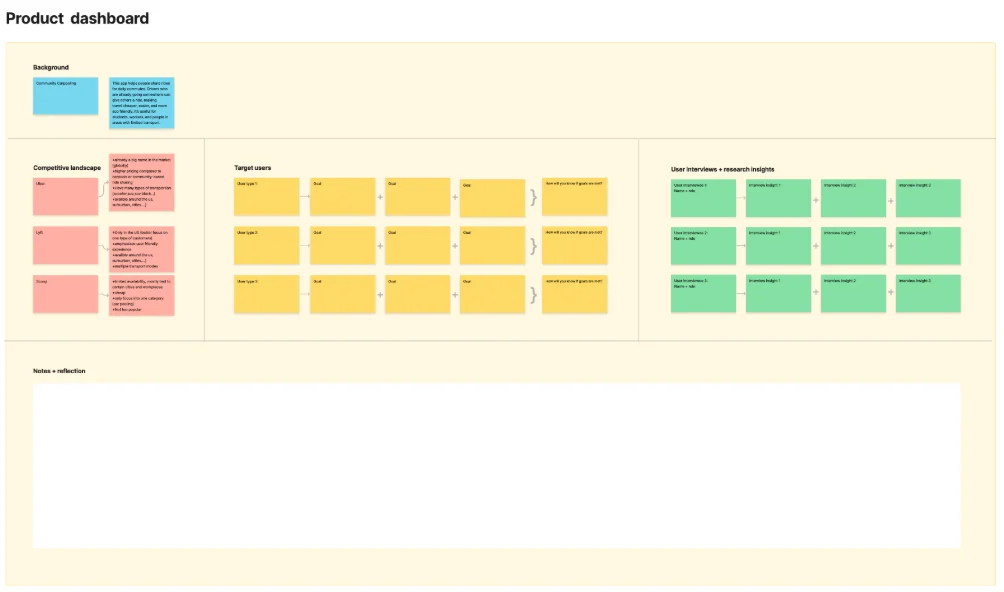
The research plan defined Blarre! as a community carpool: drivers who are already making a trip offer seats to others, which lowers cost and reduces emissions. It identified three target groups (students, workers and parents) and set a measurable goal for each.
Talking to commuters
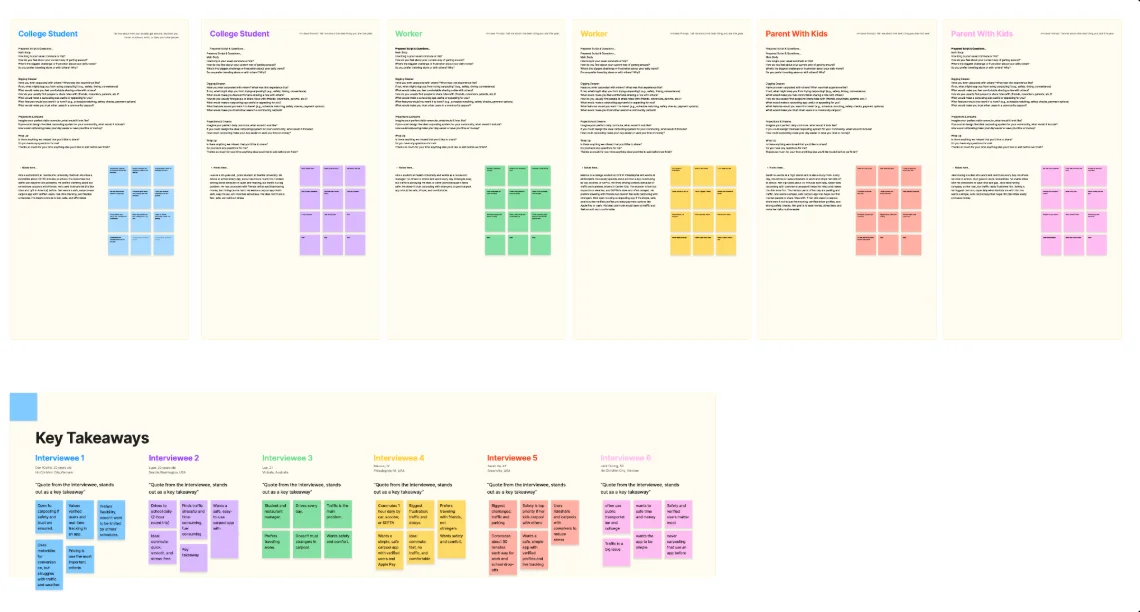
I interviewed six participants, two from each group, across four countries. Recruiting from different cities helped show whether the problems were general to commuting or specific to one city's transit system.
The interview guide moved from current habits to an ideal carpool system:
- HabitsHow long is your commute? What frustrates you most?
- AttitudesAlone or with others? Have you carpooled? What stops you?
- TrustWhat would make you comfortable sharing a ride with another user?
- DreamDescribe your perfect commute and your ideal carpool system.
Scanning the competition
The analysis showed a gap in the market. Uber and Lyft are widely available but too expensive for daily commuting. Scoop is affordable, but it operates in only a few cities and requires an employer partnership.
| Uber | Lyft | Scoop | |
|---|---|---|---|
| Focus | Global ride-hailing | US ride-hailing | Daily commute carpools |
| Reach | ~15,000 cities | All 50 US states | 6 metro areas |
| Strength | Biggest driver network | Friendly, community feel | Lowest price |
| Weakness | Too pricey for daily use | Too pricey for daily use | Tied to employer partners |
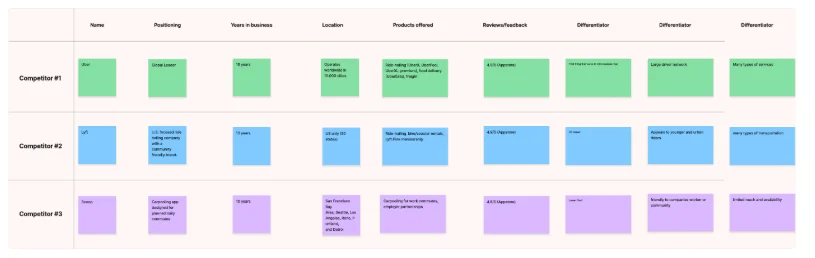
The opportunity: a price similar to Scoop, without an employer requirement, with trust based on verified schools, workplaces and parent groups.
People are willing to carpool to save money, but only with people they can verify.
I grouped the interview notes on an affinity map. Cost was a leading concern in every group, and riding with strangers was the most common barrier.
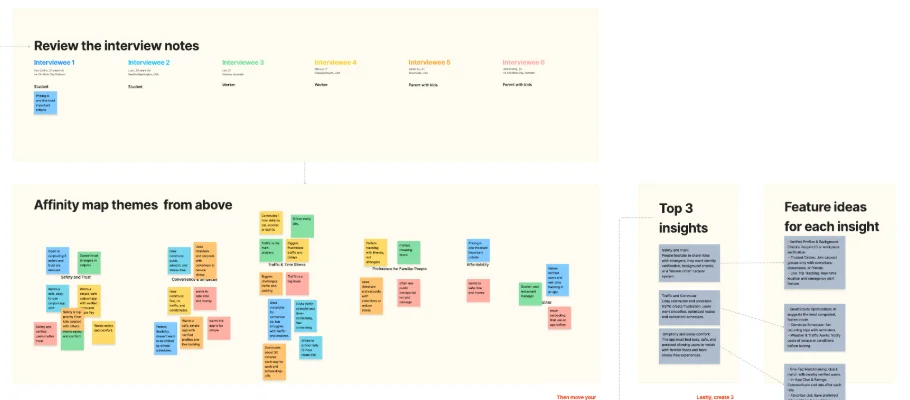
People want ID checks, background checks, or a "known circle" of coworkers, classmates or friends before they share a car.
Commutes of up to 2 hours round trip, plus unpredictable traffic, make people want steady schedules and faster routes.
The app should feel easy and safe, ideally matching people with familiar faces.
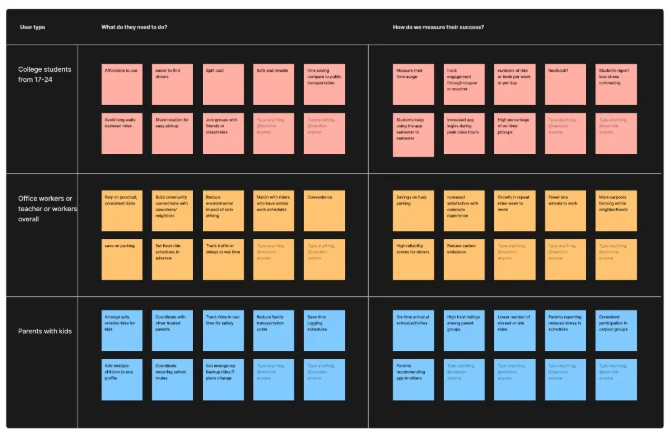
User types and success measures
| User type | Needs | Success looks like |
|---|---|---|
| Students | Cheap rides, easy-to-find drivers, faster than transit, rides with classmates | Rides booked per week, savings vs. transit, repeat use all semester |
| Workers | Gas and parking savings, punctual rides, matches with similar schedules | On-time arrivals, high reliability scores, carpools forming by neighborhood |
| Parents | Safe rides for kids, trusted parents to coordinate with, live tracking, backup rides | High trust ratings, fewer missed pickups, recurring school routes |
From insights to features.
I generated three feature ideas for each insight and selected those that addressed trust most directly.
| Insight | Feature ideas | Made it into the prototype |
|---|---|---|
| Safety & trust | Verified profiles + ID checks · Trusted circles · Live trip tracking | Safe Verify at sign-up; verified badges and ratings on every rider |
| Traffic & time | Smart route suggestions · Commute scheduler · Traffic alerts | Saved places on Home; ride scheduling; automatic meetup reminders |
| Simple & comfortable | One-tap matching · In-app chat + ratings · Favorite drivers | "Mates looking to join" list, chat with riders, post-ride rating |
Three flows
The first draft followed a ride-hailing model.
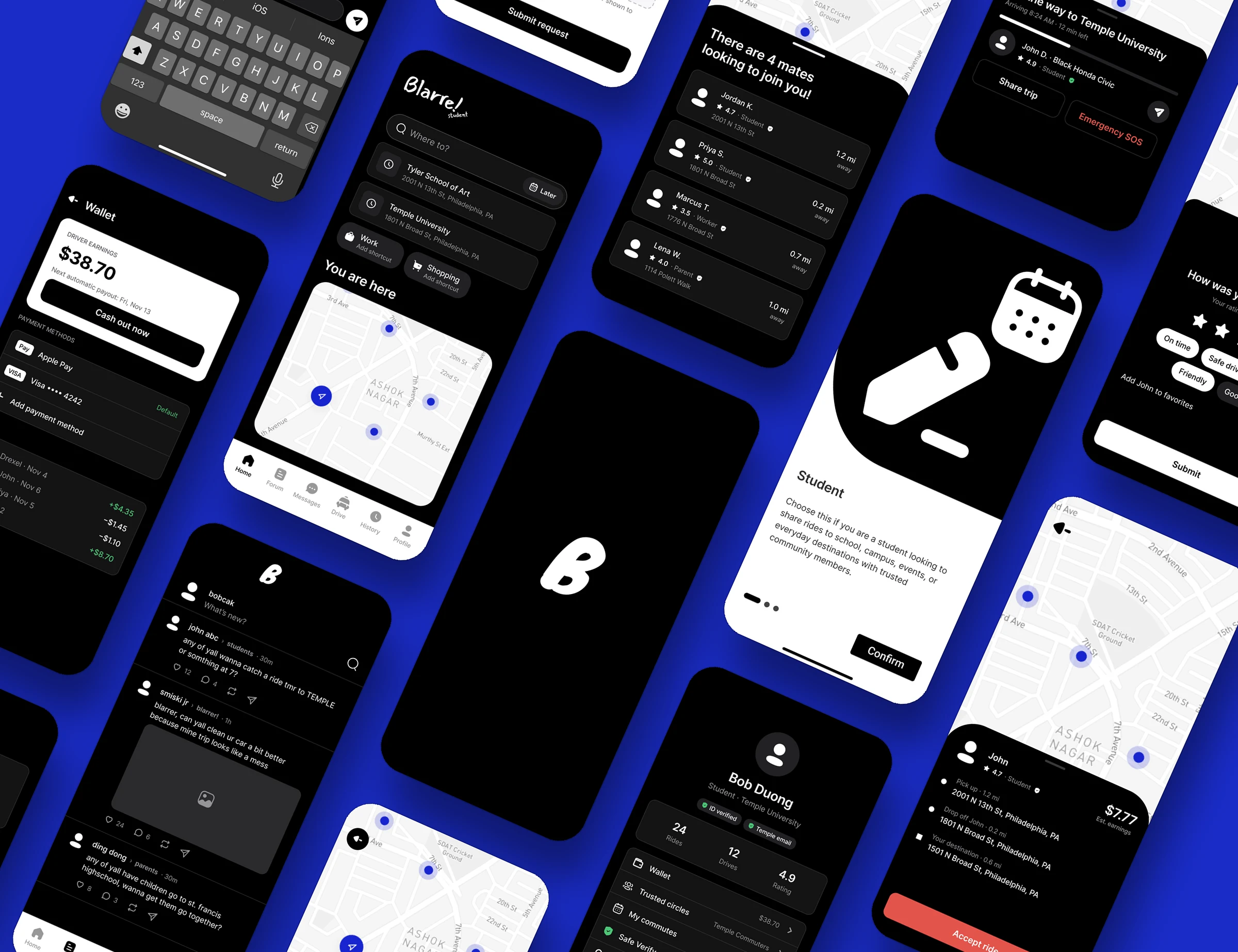
The first draft was a booking flow: enter a pickup and destination, choose a Student, Worker or Parent ride, wait for a "drive mate," then rate the trip. The flow was functional, but riders could not see who would pick them up, which was the main need participants described.
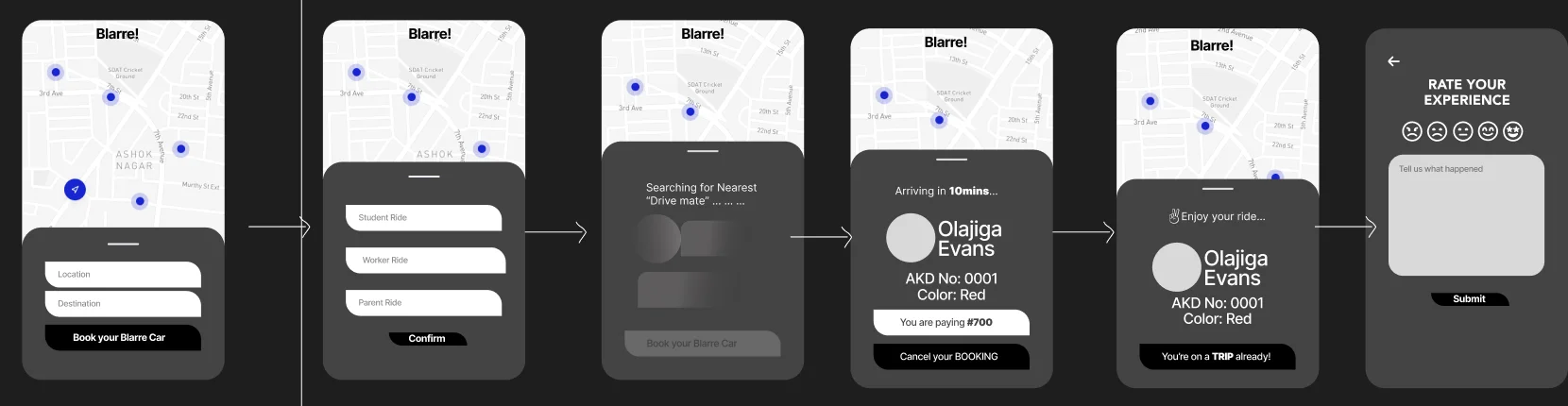
Revision: from ride-hailing to a trusted carpool
| Draft 1 | Final | Why |
|---|---|---|
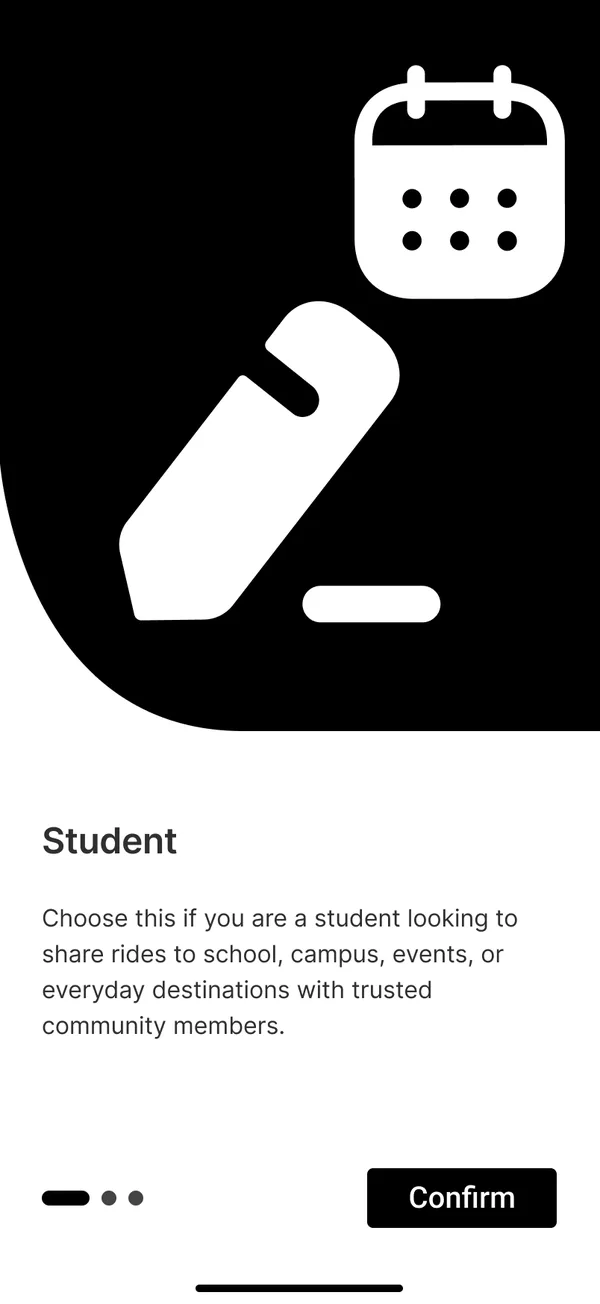
| Pick a ride type on every trip | Choose Student, Worker or Parent once, at sign-up | Matching and groups can use who you are |
| Safe Verify was optional | Safe Verify required before the first ride | Trust was the #1 blocker |
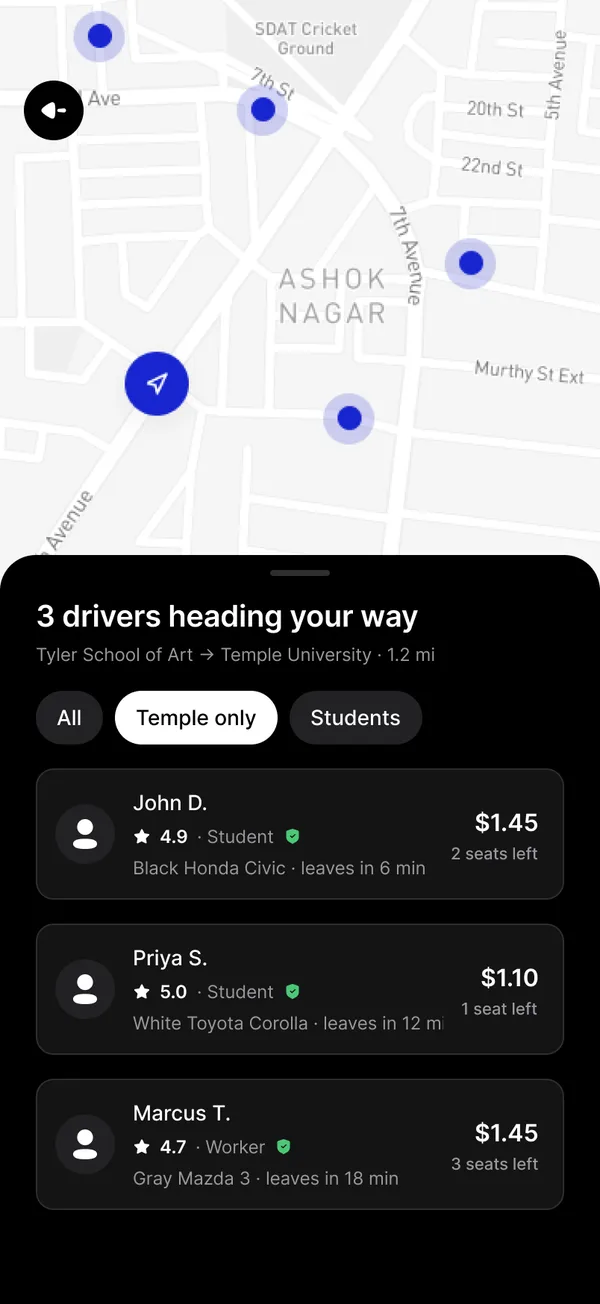
| The app assigns a driver | Both sides see rating, role and verified badge, then choose | Both parties know who they are riding with |
| Booking only | A Forum for ride requests and recurring carpools | Supports rides with familiar people |
Getting started
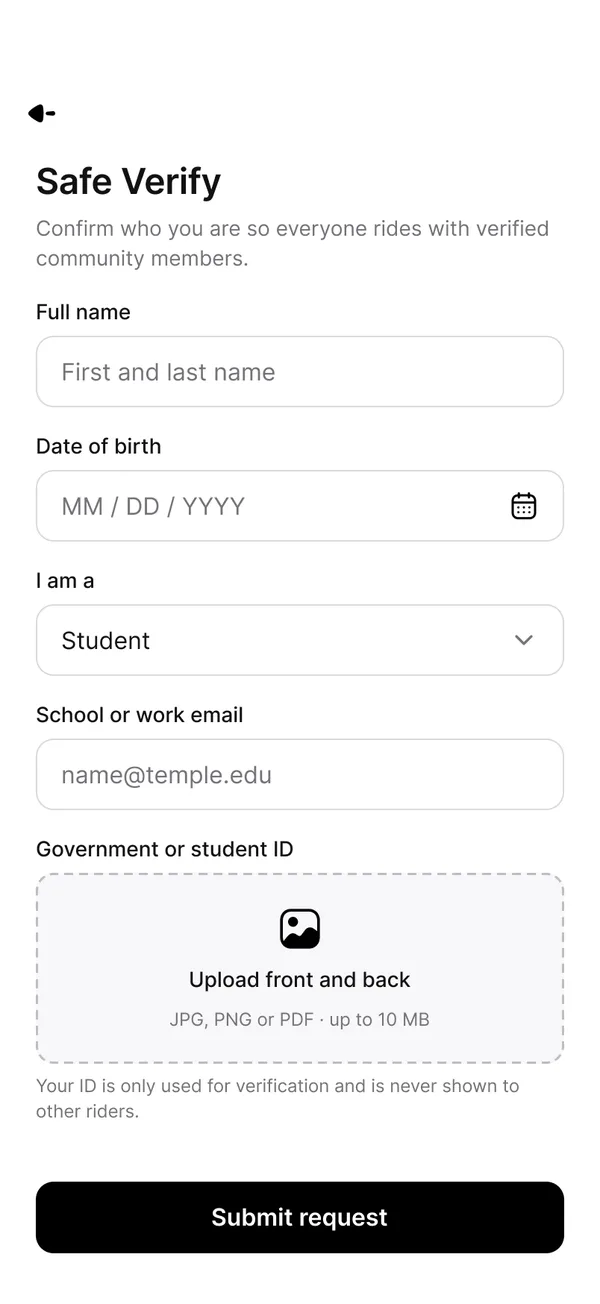
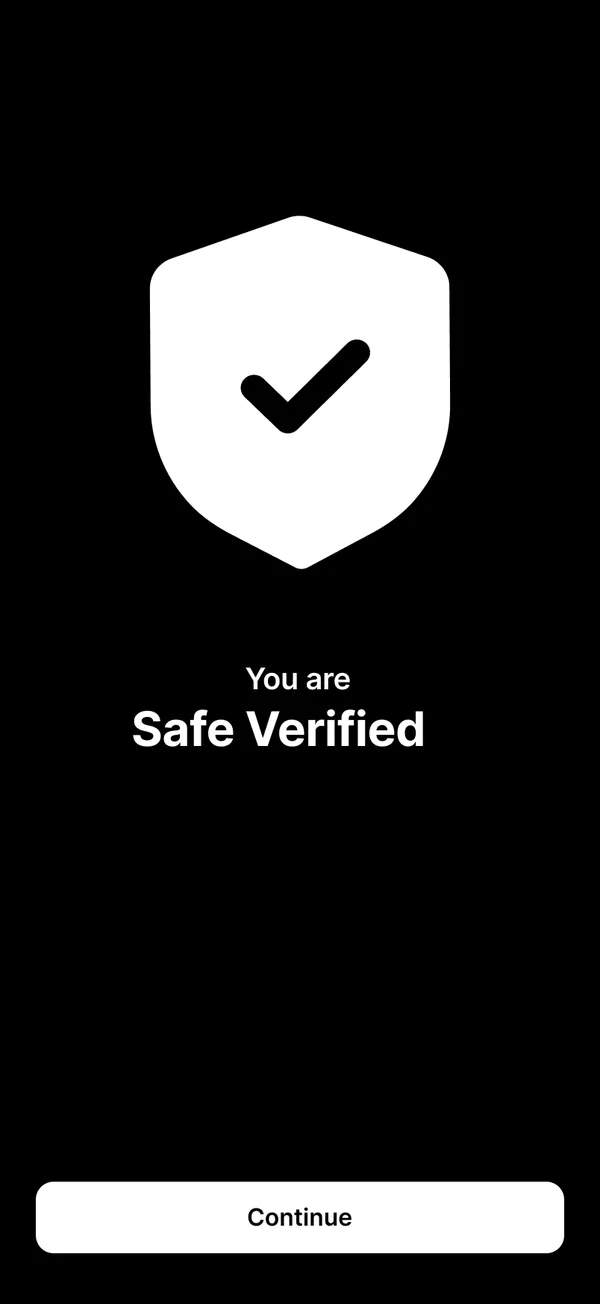
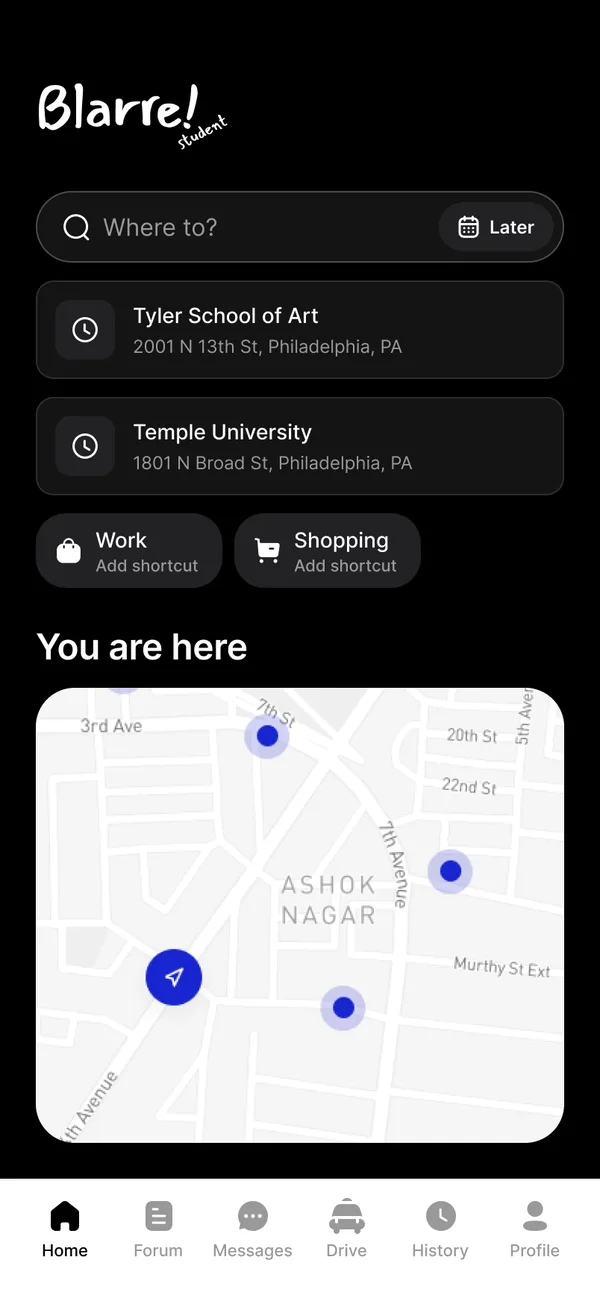
Select a user type once, verify identity and arrive at Home.

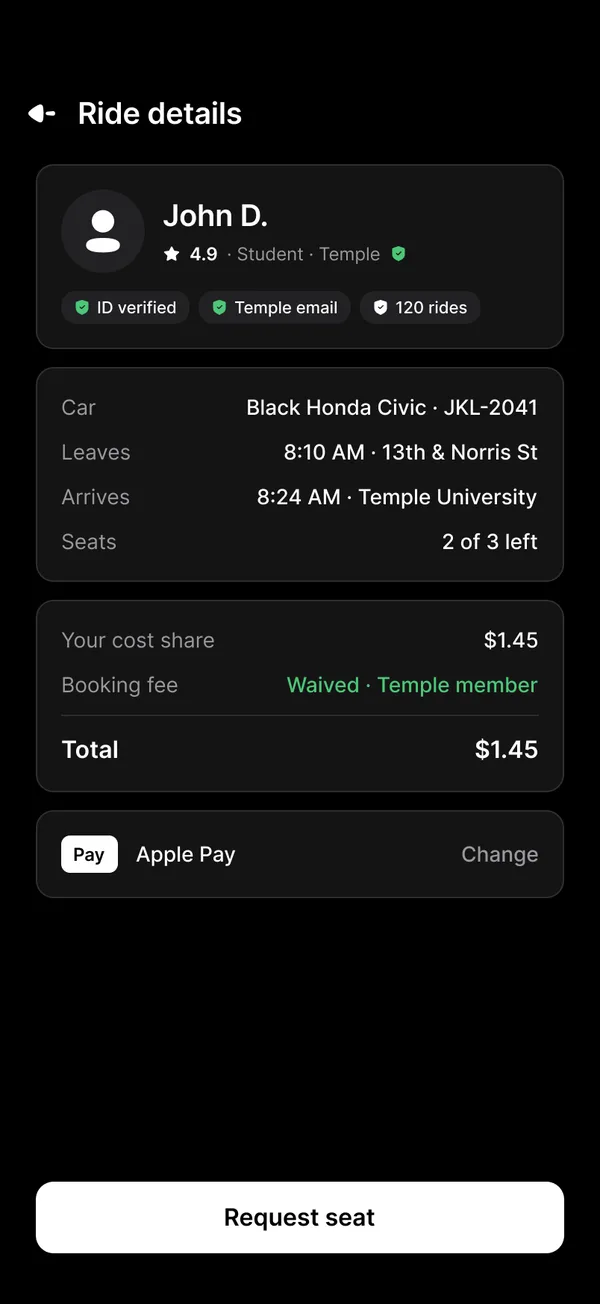
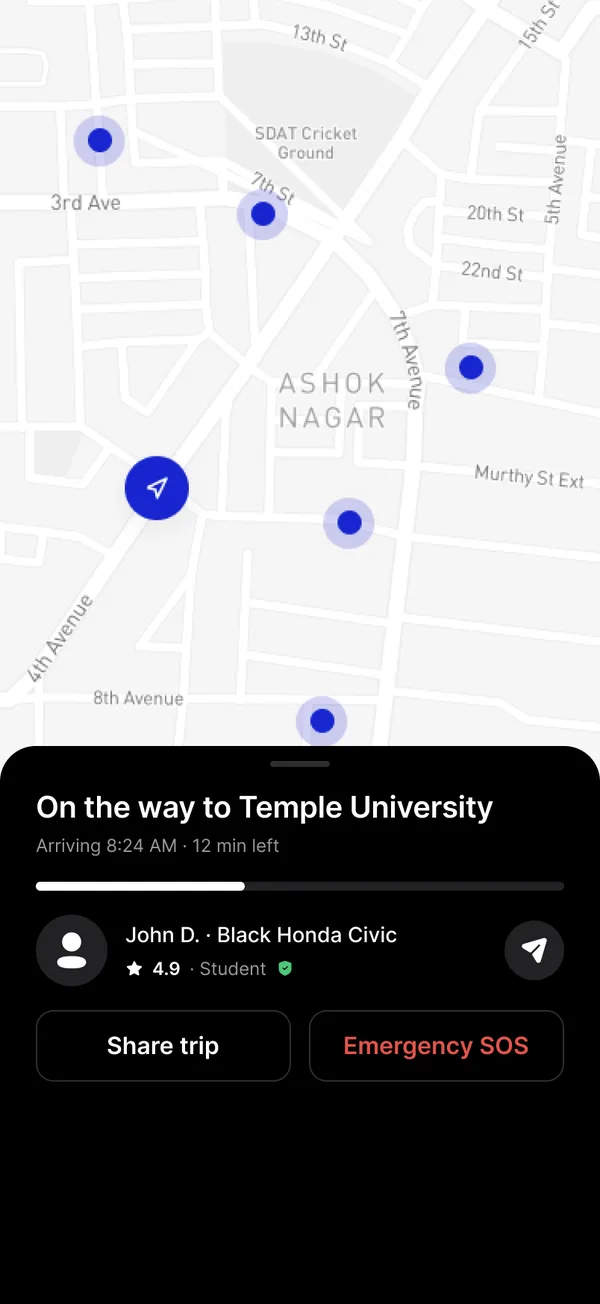
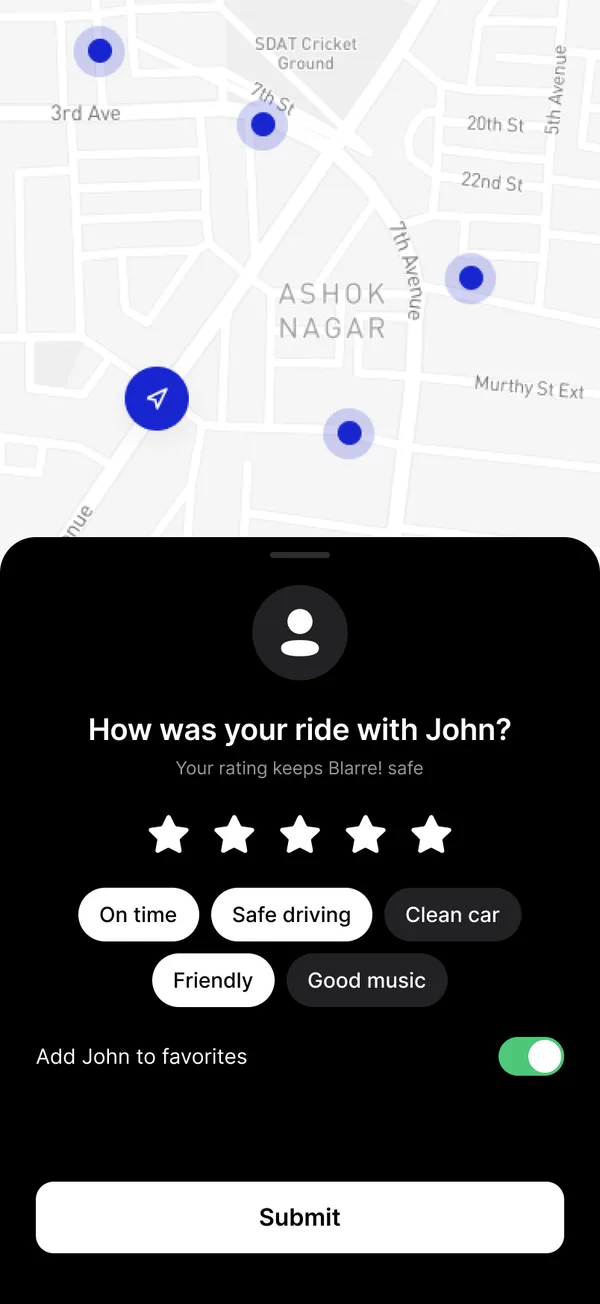
Ride with Blarre!
View verified drivers heading the same way, share the cost and rate the ride.
Become a driver
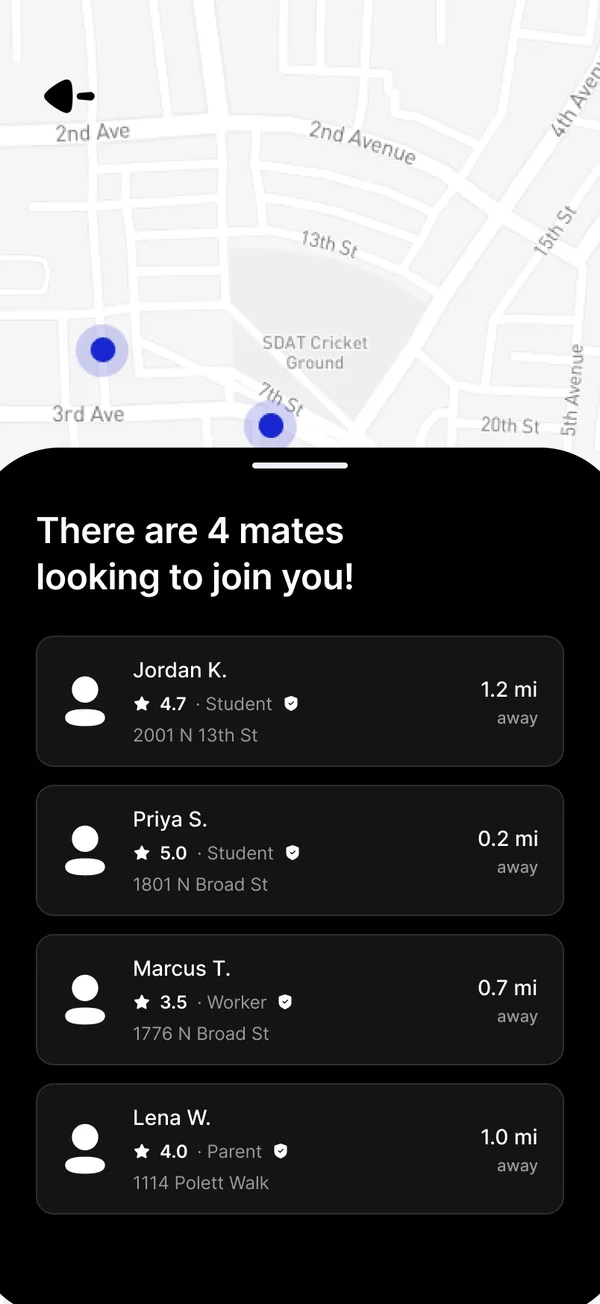
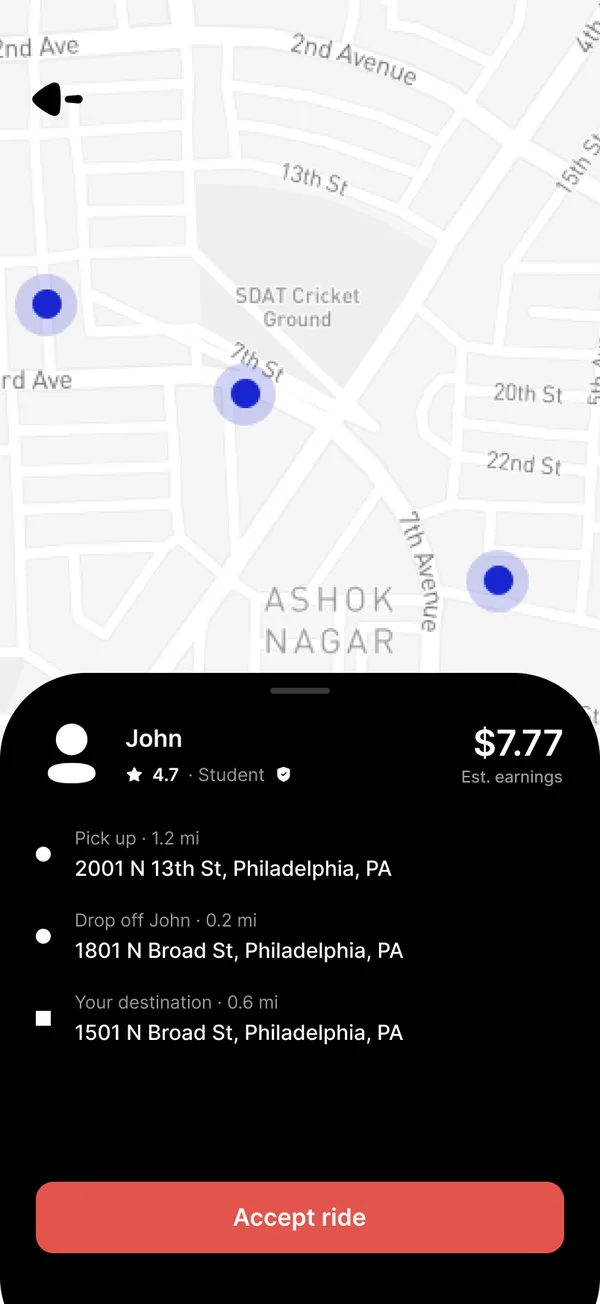
Drivers see riders who want to join, with ratings and roles, and choose whom to pick up.
Community
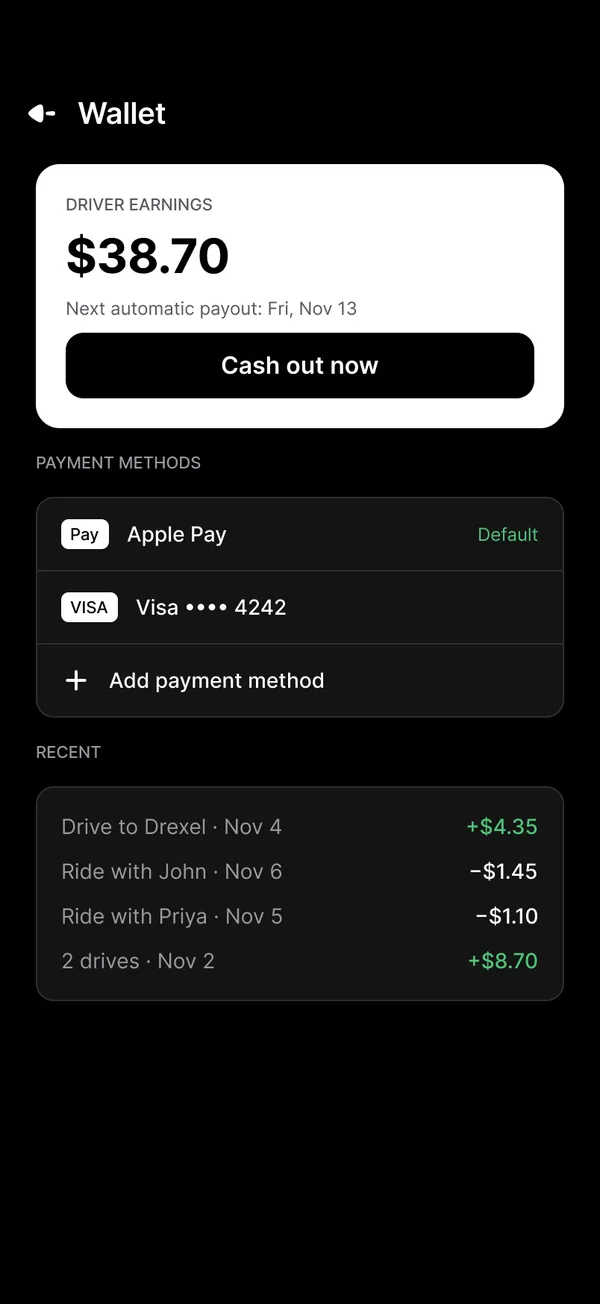
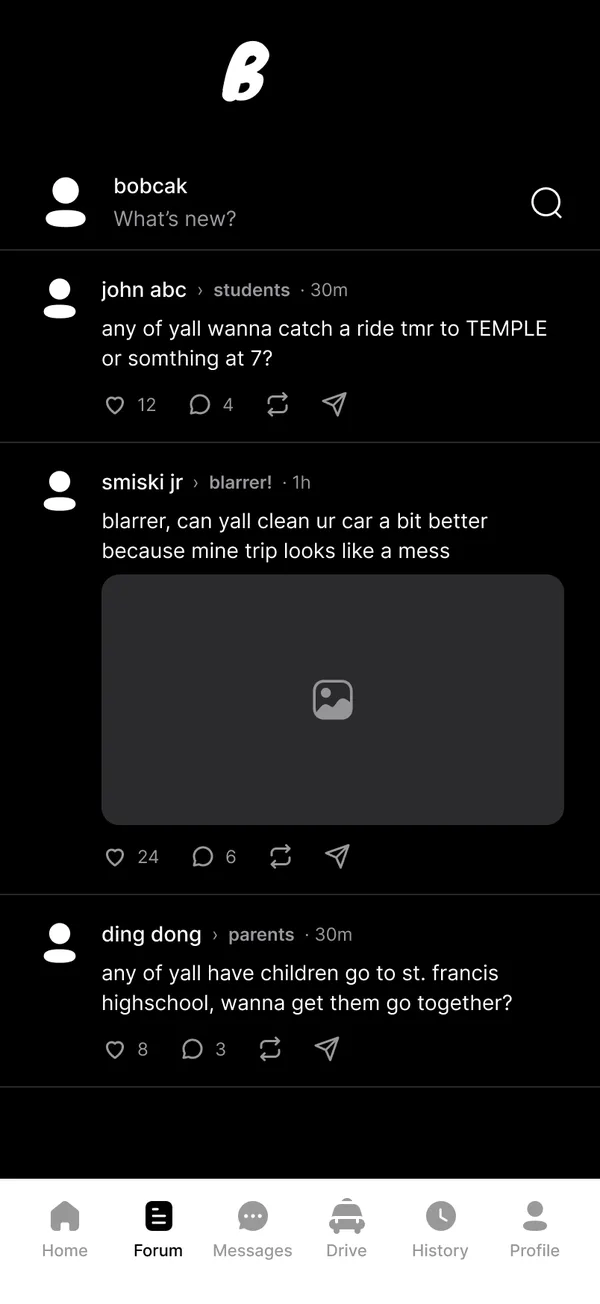
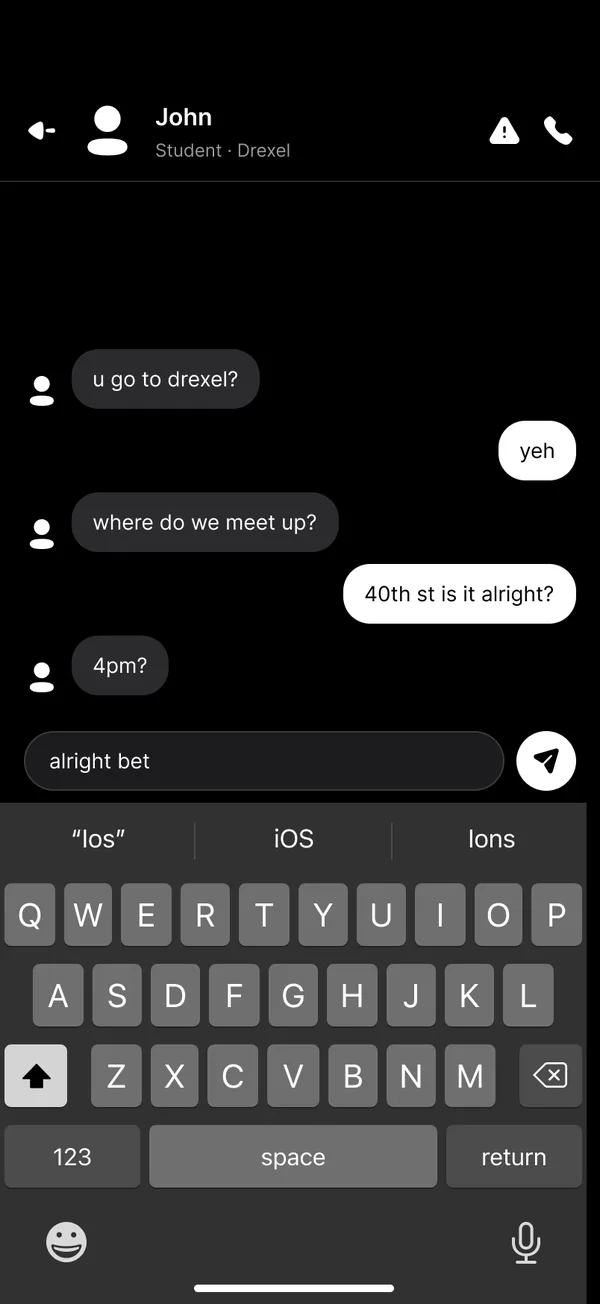
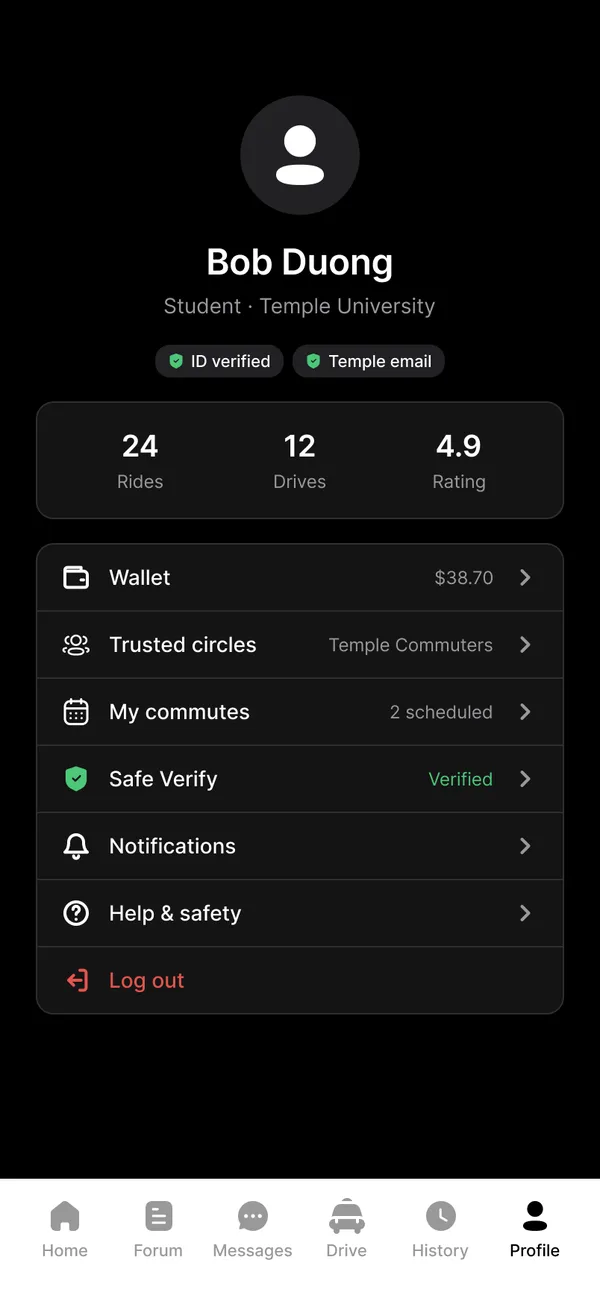
Post a ride to a group, message other users and manage a verified profile.
Addressing critique through a design system.
A design critique produced 12 notes on the high-fidelity screens. Most concerned consistency, so I addressed them with shared styles and components rather than individual screen edits.
| Critique note | What I changed |
|---|---|
| "Set typography styles" | An 11-style Inter type scale, Display 32 → Caption 11, on every screen |
| "Button text is too big" | One Button component: 48px tall, 16px semibold, Light / Dark / Accent |
| "Icons should be 24 or 32px" | A Tab Bar component with 24px icons; header icons standardized |
| "Update Safe Verify to industry standards" | Labeled 48px inputs, date picker, role dropdown, dashed ID upload |
| "Use a 6 / 12 / 24 / 32 spacing rule" | Lists and sheets rebuilt in auto layout with 12/24px gaps, 24px margins |
| "Bubbles need side margins" | 16px chat margins, one consistent keyboard, a proper message bar |
I also rebuilt the prototype: 39 iPhone 17 Pro screens, a working tab bar on every screen and five starting points for presentation, with no dead ends.
Revenue from partners, shared costs for riders.
Most revenue comes from college and employer partners, not from a commission on each fare. Riders pay only their share of the trip's real cost (capped at the 2026 IRS rate of 72.5¢/mile) plus a flat $0.99, waived for partner members. Drivers keep 100% of the cost share.
Cost per rider decreases as the car fills
On a 6-mile trip the total cost stays at $4.35, so each additional rider lowers the price for everyone.
Illustrative figures, not actual pricing. Insurance and cost-sharing rules would require legal review before launch.
Key learnings.
Next steps
- TestRun usability tests of all three flows with at least five commuters and measure task completion.
- Trusted circlesPrivate carpool groups for a school, workplace or parent group.
- Safety for parentsLive trip sharing and a guaranteed backup ride home.
- PilotLaunch on one campus at a time, beginning with Temple commuters.